
Matrix vs Slack: Self-Hosted Team Chat in 2026
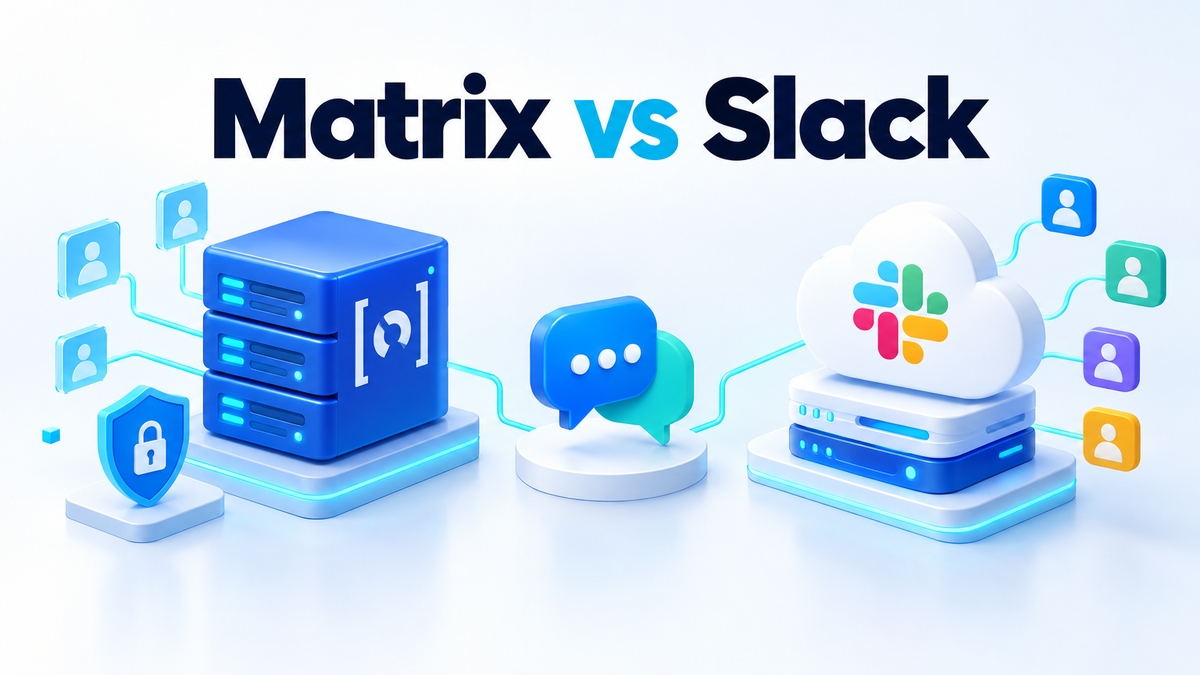
Your team needs chat. The question is: who should own the conversation — a company in San Francisco, or you?
Slack is easy. Everyone knows Slack. But every year, more businesses are asking the same question: why are we paying forever for something we could run ourselves?
Matrix is the answer for a growing crowd. Let's compare them honestly — no hype, no jargon walls.
What you actually pay
Slack's pricing is simple and painful: the paid plans start around $8.75 per person per month. A team of 20 people? That's about $175 a month, every month, forever. The free plan exists, but it hides your history after 90 days — which makes it useless for real work.
Matrix is open source. The software costs nothing. You pay for a small server (a $5–10 VPS works fine for a small team) and a domain you probably already own. For a 20-person team, that's roughly $10 a month total — about 94% less.
Who owns your data?
With Slack, every message sits on Slack's servers. Your contracts, your plans, your honest internal conversations — all readable by a company you don't control, under laws you don't choose.
With Matrix, the server is yours. Your data lives on hardware you control, in a country you choose. If privacy matters to your clients — and it should — that's a difference you can sell.
What Matrix actually involves
Let's be honest: self-hosting Matrix isn't a Saturday-afternoon project for a beginner. Here's what a real setup includes:
- Installing Synapse (the Matrix server) with Docker
- Setting up a domain and HTTPS certificates
- Turning on registration the right way (so strangers can't join your server)
- Configuring backups — a chat history you can't restore is a chat history you never had
- Updating it regularly (like every self-hosted thing, updates are homework)
None of it is magic. It's the same work any serious IT setup needs — just done once, properly.
Where Slack still wins
Fair is fair. Slack has polish Matrix is still catching up on:
- It just works — zero setup, instant invites
- Better mobile apps in some areas
- A huge marketplace of integrations
- Your whole team already knows it
If you're a three-person startup shipping next week, Slack is fine. You're paying for speed and convenience — and that's a legitimate choice.
Where Matrix wins
- Cost — near zero per user, forever
- Privacy — your server, your rules, your jurisdiction
- Interoperability — Matrix connects to other Matrix servers and even bridges to Slack, Teams, and WhatsApp
- No vendor lock-in — the protocol is open; nobody can switch your service off
The honest verdict
Pick Slack if you want zero effort and don't mind renting your conversation history.
Pick Matrix if you're past 10–15 people, care about privacy, or simply hate the idea of a monthly bill that grows as your team grows.
And if the setup part scares you — that's fair too. It's real work. The good news: it's exactly the kind of work I do for a living. I set up Matrix servers for businesses — properly, with backups, monitoring, and documentation in plain English. If you'd rather have it done right the first time, my inbox is open.